Ingredient profile
Panax Ginseng and Eleuthero in Cinna Harmony: Leaf, Stem and Root
Cinna Harmony lists two ginseng-type herbs in its 200 mg blend: Panax ginseng aerial extract (leaf and stem) in 12th place and eleuthero root in 5th. By label order, that caps them at about 17 mg and 40 mg per serving. Most ginseng research uses the root, and leaf-stem blood sugar data come only from animal and test-tube studies.
Written by the Cinna Harmony editorial teamUpdated
On the label
Which ginseng is in Cinna Harmony?
Cinna Harmony lists "Panax Ginseng Aerial Extract" and "Eleutherococcus Senticosus Root Extract." Both sit inside the 200 mg proprietary blend, so neither amount is printed.
Panax ginseng is often called Asian ginseng. The word "aerial" means the parts that grow above ground: the leaves and stems. Eleuthero is a different plant from a different genus. Some shops sell it as "Siberian ginseng," but it is not a Panax species.
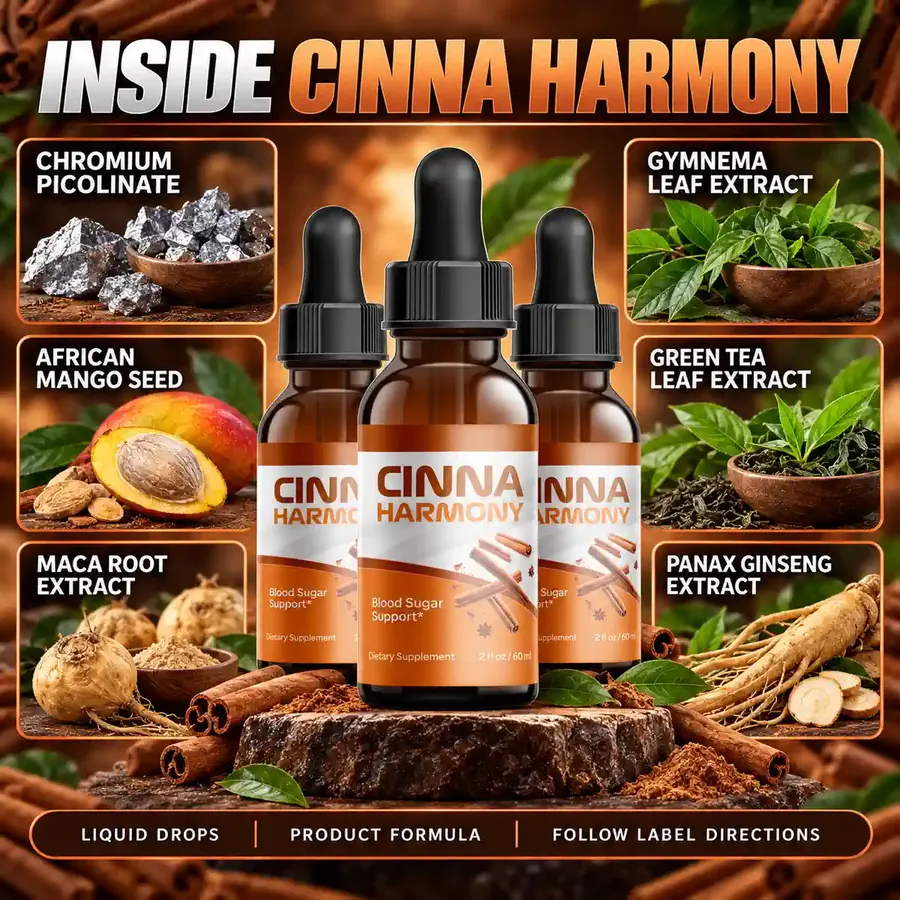
The sales page names Panax ginseng aerial as one of six featured ingredients (Cinna Harmony sales page, October 2026).
| Label name | Panax Ginseng Aerial Extract, Eleutherococcus Senticosus Root Extract |
|---|---|
| What it is | Panax ginseng leaf and stem; Eleutherococcus senticosus root |
| Type | Ginseng plant parts |
| Position on the label | 12 and 5 of 22 in the blend |
| Amount per serving | Not printed (at most about 17 mg and 40 mg) |
| What research shows | Ginseng research is mostly on the root; leaf-stem blood sugar data are animal and test-tube only |
| Strength of evidence | Inconclusive; aerial parts barely studied in people |
| Why it is in the formula (brand view) | Named on the sales page and the brand's ingredient graphic |
| Main caution | Ginseng may affect blood clotting; eleuthero raised digoxin levels in a case report. Insomnia is common with ginseng. |
Plant parts
What does "aerial" mean on the Cinna Harmony label?
Leaf and stem. That one word changes which research applies.
Aerial means leaf and stem, so the Panax ginseng in Cinna Harmony is not the root. That matters because most human ginseng research, including the studies NCCIH summarizes, used the root (NCCIH, Asian ginseng).
A review of ginseng leaf and stem found that it holds many of the same compounds, called ginsenosides, as the root. Two of them, Re and Rd, are the main ones in the leaf. But the amounts change a lot with the season, the growing area and the age of the plant (Wang et al., Chin Med 2009).
Blend math
How much ginseng is in each dropper of Cinna Harmony?
The label hides the amounts. Its order still sets a ceiling.
- 1Maca root extract9 to 200 mg
- 2Grape seed extract0 to 100 mg
- 3Guarana seed extract0 to 67 mgA natural caffeine source; caffeine amount not printed
- 4African mango seed extract0 to 50 mg
- 5Eleuthero root extract0 to 40 mg
- 6Astragalus root extract0 to 33 mg
- 7Green tea leaf extract0 to 29 mgAlso contains caffeine
- 8Gymnema leaf extract0 to 25 mgThe herb most tied to blood sugar claims
- 9Coleus forskohlii root extract0 to 22 mg
- 10Capsicum (pepper) fruit extract0 to 20 mg
- 11Grapefruit fruit extract0 to 18 mg
- 12Panax ginseng aerial extract0 to 17 mgLeaf and stem, not root
- 13Raspberry ketones0 to 15 mg
- 14L-glutamine0 to 14 mg
- 15L-tyrosine0 to 13 mg
- 16L-arginine base0 to 12 mg
- 17Beta-alanine0 to 12 mg
- 18Monoammonium glycyrrhizinate (licorice)0 to 11 mg
- 19GABA0 to 11 mg
- 20L-ornithine HCl0 to 10 mg
- 21L-tryptophan0 to 9.5 mg
- 22L-carnitine base0 to 9.1 mg
- ?Cinnamon0 mgNot one of the 22. The name suggests it; the list does not include it.
Blend ingredients are listed from heaviest to lightest (FDA, Labeling guide), so the ingredient in place k can weigh at most 200 ÷ k mg per serving. That is our math from the label, not a lab test. Chromium sits outside the blend with its own amount: 0.7 mcg.
FDA rules say blend ingredients must be listed heaviest first (FDA, Labeling guide). So the ingredient in place 12 can weigh no more than 200 divided by 12, about 17 mg per serving. Eleuthero, in place 5, can weigh no more than 40 mg. These are ceilings, not lab amounts.
If a full dropper holds about 1 mL (our assumption; the label does not say), then 2 droppers a day means at most about 33 mg of ginseng leaf-stem extract and 80 mg of eleuthero. The Supplement Facts page shows every line in order.
Research check
Does ginseng help blood sugar?
The research is mixed for the root and thin for the leaf.
Not clearly. NCCIH says some evidence suggests Asian ginseng might lower blood sugar, but studies on blood sugar control in diabetes are inconclusive and conflicting (NCCIH, Asian ginseng). That research used the root.
For the leaf and stem, blood sugar findings come from diabetic mice and test tubes, with few placebo-controlled human trials (Wang et al., Chin Med 2009). For eleuthero, MSKCC calls human studies quite limited and lab results conflicting (MSKCC, Siberian ginseng).
No trial has tested Cinna Harmony itself. The American Diabetes Association does not recommend herb or spice supplements for blood sugar benefit (ADA, Standards of Care 2026).
Try Cinna Harmony, 1 or 2 droppers a day2, 3 or 6 bottles · free US shipping on 3 and 6 · 60-day guarantee
Order nowThe other one
What is eleuthero, and why is it higher on the list?
Eleuthero is the root of Eleutherococcus senticosus, a shrub from northeast Asia. It is fifth in the blend, so it may weigh more than the Panax ginseng in each serving.
The sales page does not feature it, yet it may be one of the larger shares of the 200 mg. When you check herbs against a medicine, use the full label list.
Safety
Who should be careful with ginseng and eleuthero?
People on digoxin, blood thinners or diabetes medicines should ask first.
In one case report, Siberian ginseng raised blood digoxin levels. It may also make digoxin blood tests read falsely high (MSKCC, Siberian ginseng). Tell your clinician before you start, and mention it before any digoxin test.
| Concern | What the source says | Practical step |
|---|---|---|
| Blood clotting | Asian ginseng may interfere with clotting (NCCIH, Asian ginseng) | Ask first if you take a blood thinner or have surgery planned |
| Sleep | Insomnia is the most common side effect (NCCIH, Asian ginseng) | Take it in the morning; stop if sleep gets worse |
| Diabetes medicines | Some supplement ingredients can intensify them (ADA, Vitamins and supplements) | Keep checking your readings and tell your care team |
NCCIH says root use for up to 6 months appears safe for most people (NCCIH, Asian ginseng). More on the side effects page.
The full label
Where does ginseng sit among the other Cinna Harmony ingredients?
Ginseng leaf-stem and eleuthero are two of 22 blend ingredients, next to chromium and the sweeteners. The ingredients overview groups them all, and the name versus label page explains why cinnamon is not among them.
FAQ
Ginseng in Cinna Harmony: common questions
Is the ginseng in Cinna Harmony root or leaf?
It is leaf and stem. The label says "Panax Ginseng Aerial Extract," and aerial means the parts above ground. The brand's graphic pictures a root, but the label wins. Most human ginseng studies used the root, so their results do not carry over directly.
How much Panax ginseng is in a dropper of Cinna Harmony?
The amount is not printed. Panax ginseng aerial is 12th of 22 blend ingredients, so by label order it can weigh at most about 17 mg per 1 mL serving. If a dropper holds about 1 mL, two droppers a day means at most about 33 mg.
Is eleuthero the same as Panax ginseng?
No. Eleuthero comes from Eleutherococcus senticosus, a different plant. It is often sold as Siberian ginseng, but it is not a Panax species. In Cinna Harmony it is 5th in the blend, so it may weigh more than the Panax ginseng.
Can ginseng in a supplement lower blood sugar?
The evidence is unclear. NCCIH calls ginseng research on blood sugar control in diabetes inconclusive and conflicting, and that work used the root. Leaf-stem data come from animal and test-tube studies. No trial has tested Cinna Harmony, so no blood sugar effect can be claimed for it.
Can I take Cinna Harmony if I take digoxin?
Talk to your clinician first. A case report found Siberian ginseng (eleuthero) raised blood digoxin levels, and it may make digoxin tests read falsely high. Cinna Harmony lists eleuthero in 5th place. Mention the supplement before any digoxin blood test.
Does the ginseng in Cinna Harmony cause trouble sleeping?
It might for some people. NCCIH lists insomnia as the most common side effect of Asian ginseng. Cinna Harmony also holds guarana and green tea, which contain caffeine. If sleep gets worse, take it earlier in the day or stop and ask your clinician.
Who wrote this
Written and reviewed by
Plain-language pages built from the label, the sales page and linked public health sources.
Last updated . Read our editorial standards and how we check reviews. This website is run by Cinnaharmonys, a USA Authorized Cinna Harmony Retailer, not by the manufacturer. We earn money when you buy through our order links.
Keep reading
More about Cinna Harmony
Ingredients
All 23 active ingredients and the nine others, in label order, with the blend math and the missing cinnamon.
Read more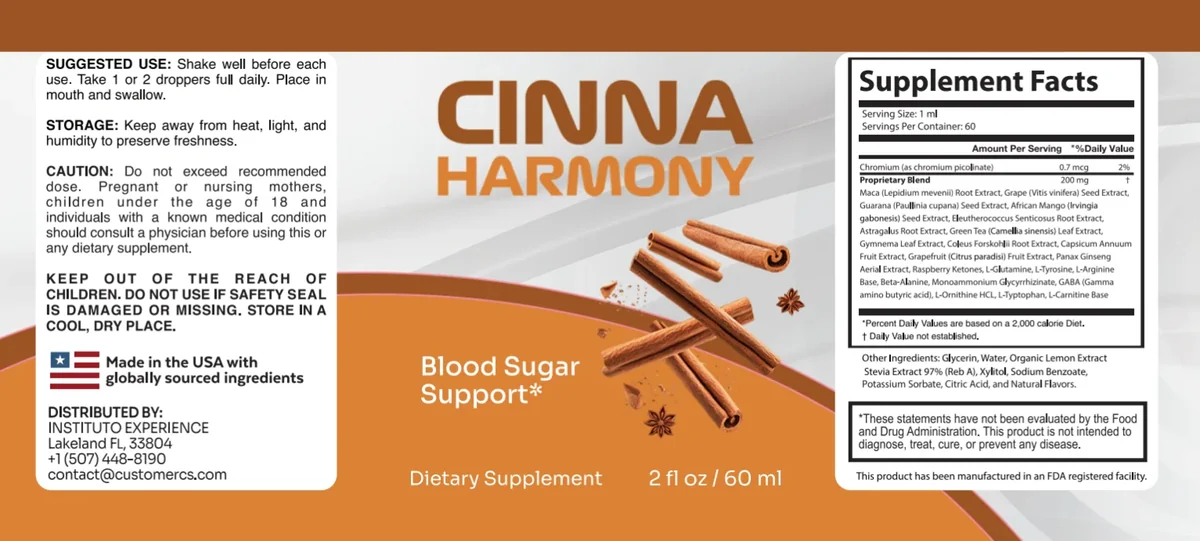
Side effects
Every caution tied to a named ingredient, the warning signs that need care, and how to stop safely.
Read moreSupplement Facts
Every line of the Cinna Harmony label typed out, with the blend math, the typos and what the label leaves out.
Read moreUSA Authorized Cinna Harmony Retailer
Ready to try Cinna Harmony?
Pick a pack on the sales page. 1 or 2 droppers a day, 30 to 60 days per bottle. Guarantee: 60 days from purchase.
- Order on the sales page
- 60 days from purchase
- Label email: [email protected]