Research
Does Cinnamon Help Blood Sugar? The Studies and the Cinna Harmony Label
Does cinnamon help blood sugar? The research is mixed, as a Cochrane review of 10 trials found no clear A1C change and NCCIH calls the benefit unclear. Trials used about 2 g a day. The CinnaHarmony label lists no cinnamon, so these cinnamon studies describe a different thing.
Written by the Cinna Harmony editorial teamUpdated · 8 min read
Why it matters
Why do people take cinnamon for blood sugar?
Cinnamon has a reputation as a kitchen spice that might help blood sugar. That reputation comes from a set of small trials with mixed results.
It has been studied in people with type 1 and type 2 diabetes for more than a decade. One point first, for readers who came from a product label: Cinna Harmony's name and front art suggest cinnamon, yet its label lists none.
The evidence
What do the main cinnamon studies show?
Four reviews, four slightly different answers. The pattern: maybe a small fasting glucose drop, no clear A1C change.
| Review | What was studied | Fasting glucose | A1C |
|---|---|---|---|
| NCCIH fact sheet (2024) | Summary of the research | Hard to interpret; unclear whether cinnamon helps diabetes | |
| Cochrane review (2012) | 10 trials, 577 adults, mostly cassia at about 2 g a day for 4 to 16 weeks | Inconclusive | No significant difference |
| Allen et al. (2013) | 10 trials, 543 adults with type 2 diabetes | About 25 mg/dL lower | No significant change (-0.16%) |
| Phytotherapy Research (2024) | 24 trials in type 2 diabetes | Lower, in standardized units | Lower, in standardized units |
The Cochrane authors found insufficient evidence to support cinnamon for type 1 or type 2 diabetes (Cochrane, Leach and Kumar 2012). Most of their trials had a high or unclear risk of bias. Allen and colleagues found lower fasting glucose and better lipids, but results varied a lot from trial to trial, and the best dose and length were unclear (Allen et al., Ann Fam Med 2013).
Newer work
Did the 2024 cinnamon meta-analysis prove it works?
No, it pointed in a positive direction but did not settle the question. The 2024 analysis pooled 24 trials and reported lower fasting blood sugar and A1C versus control (Phytother Res 2024 meta-analysis). The authors said cinnamon "might have clinical potential as an adjunct therapy."
Two cautions apply. First, the results are standardized mean differences, not mg/dL or A1C points, so they are hard to turn into numbers you would see on a lab report. Second, the abstract reports identical figures for fasting blood sugar and a separate insulin measure, which may be a reporting error.
Types and safety
What is the difference between cassia and Ceylon cinnamon?
The main difference is coumarin, which cassia contains and some cassia products hold in large amounts. NCCIH explains that cassia is the most common type sold in North America, while Ceylon, called "true" cinnamon, grows mainly in Sri Lanka (NCCIH, Cinnamon). Products often do not say which type they contain.
The common supermarket type
Used in most trials. Contains coumarin; some cassia products are high in it, and long use could be a problem for sensitive people, such as those with liver disease (NCCIH, Cinnamon).
The "true" cinnamon
Grown mainly in Sri Lanka. Less common in stores and supplements. Labels do not always say which type is inside.
In food amounts, cinnamon is likely safe. Larger amounts or long use can cause stomach upset or allergic reactions (NCCIH, Cinnamon). In the Cochrane trials, side effects were infrequent and generally mild (Cochrane, Leach and Kumar 2012).
Try Cinna Harmony, 1 or 2 droppers a day2, 3 or 6 bottles · free US shipping on 3 and 6 · 60-day guarantee
Order nowName vs label
Does the Cinna Harmony label list any cinnamon?
No. The search below starts on the word cinnamon. Try any other ingredient you like.
- The name“CINNA” HarmonySuggests: CinnamonNot listed
- The front artCinnamon sticksSuggests: Cinnamon barkNot listed
- The front artStar anise podsSuggests: Star aniseNot listed
- The front claim“Blood Sugar Support”Suggests: A blood sugar effectNo trial of this product
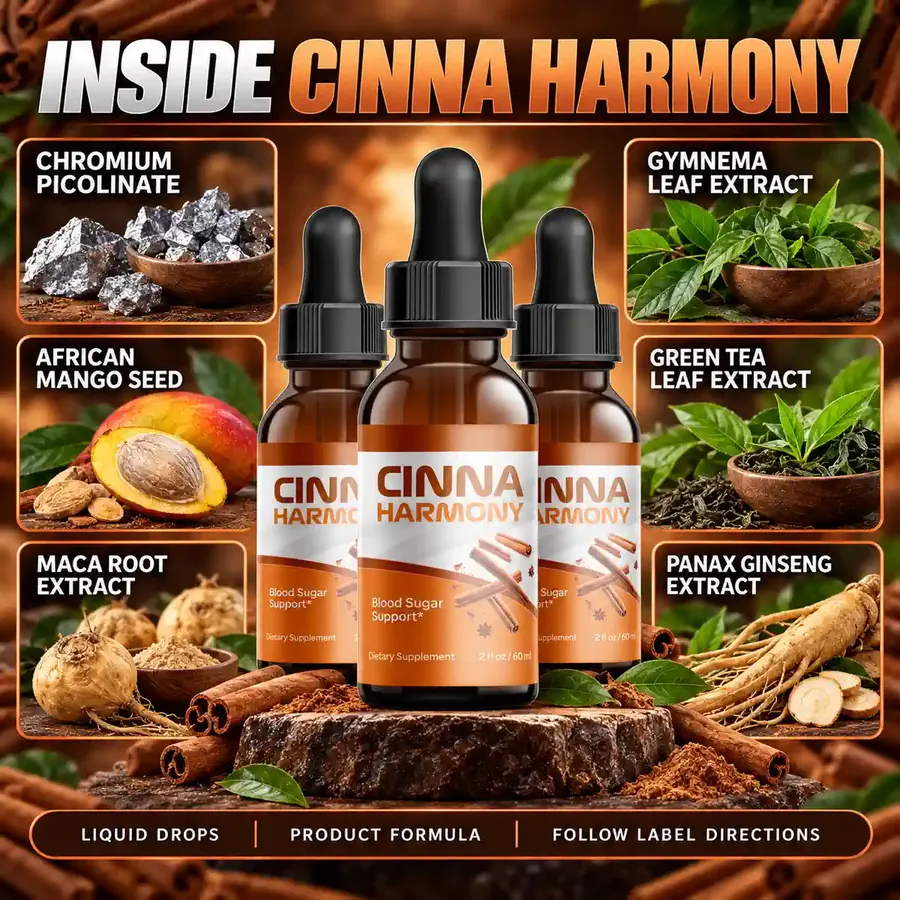
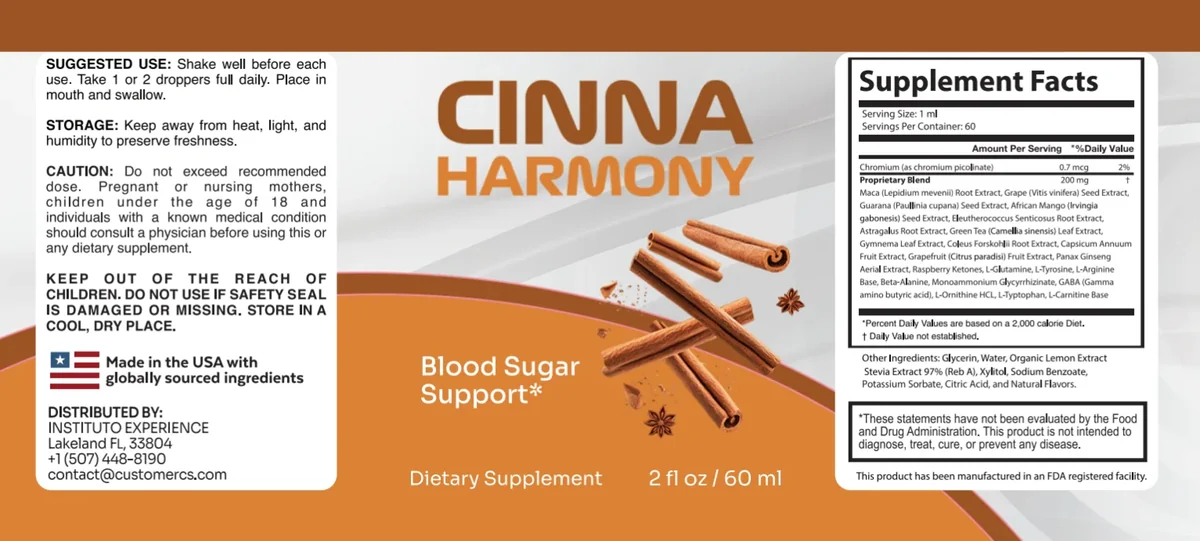
- Chromium (as chromium picolinate)
- Maca root extract
- Grape seed extract
- Guarana seed extract
- African mango seed extract
- Eleuthero root extract
- Astragalus root extract
- Green tea leaf extract
- Gymnema leaf extract
- Coleus forskohlii root extract
- Capsicum (pepper) fruit extract
- Grapefruit fruit extract
- Panax ginseng aerial extract
- Raspberry ketones
- L-glutamine
- L-tyrosine
- L-arginine base
- Beta-alanine
- Monoammonium glycyrrhizinate (licorice)
- GABA
- L-ornithine HCl
- L-tryptophan
- L-carnitine base
- Glycerin
- Water
- Organic lemon extract
- Stevia extract 97% (Reb A)
- Xylitol
- Sodium benzoate
- Potassium sorbate
- Citric acid
- Natural flavors
0 matches for “cinnamon”. Not in the Supplement Facts, not in the Other Ingredients.
A food name that suggests only some of its ingredients may be misleading under FDA rules (21 CFR 101.18(b); whether that applies to this product is FDA's call, not ours. We simply report what the label lists. The search runs only on your screen.
The label lists chromium, 22 blend ingredients and 9 other ingredients: 32 lines, and not one is cinnamon or star anise. The sales page does not name cinnamon as an ingredient either (Cinna Harmony sales page, October 2026). FDA rules say a food name that suggests only some of its ingredients may be misleading (21 CFR 101.18(b); whether that applies here is for FDA to decide. Trials used about 2 g of cinnamon a day (Cochrane, Leach and Kumar 2012); Cinna Harmony's whole blend is 200 mg per 1 mL serving, with no cinnamon in it. The full story is on the name versus label page.
What it means
Does cinnamon research apply to Cinna Harmony?
No. Research on a spice only speaks to products that hold that spice. Cinna Harmony holds none.
What cinnamon studies can tell you
- How cassia at about 2 g a day affected fasting glucose in small trials.
- That A1C did not clearly change in two major reviews.
- That side effects in trials were mostly mild.
What they cannot tell you
- Anything about a product with no cinnamon in it.
- What a 200 mg, 22-ingredient blend does; it has no trial.
- Whether a 2% chromium dose matters; the ADA does not recommend chromium for this (ADA, Standards of Care 2026).
The ingredients actually on the label are profiled on the ingredients page.
Your next step
What should you do if you want to try cinnamon?
Talk to your clinician first, especially if you take diabetes medicines or have liver disease. Coumarin in cassia is a concern with liver disease (NCCIH, Cinnamon), and the ADA warns that some supplements can intensify diabetes medicines (ADA, Vitamins and supplements).
Check the type
Look for cassia or Ceylon on the label. If it does not say, ask the seller.
Check the amount
Trials used about 2 g a day. Many products give much less, and some give none.
Track your numbers
Keep a log and review A1C or fasting glucose with your clinician, so you judge by results.
Tested options are compared on the options page.
FAQ
Cinnamon and blood sugar FAQ
Does cinnamon lower A1C?
Not clearly. A Cochrane review of 10 trials found no significant A1C difference, and a 2013 review of 10 trials found a small change that was not significant. A 2024 analysis was more positive but used standardized units and may contain a reporting error. NCCIH calls the benefit unclear.
How much cinnamon should a diabetic take a day?
No dose has been established as effective. Most trials used about 2 g a day of cassia for 4 to 16 weeks, and the best dose remains unclear. Because cassia can be high in coumarin, ask your clinician before taking cinnamon as a supplement, especially with liver disease.
Does Cinna Harmony have cinnamon extract in it?
No. The label lists chromium, a 22-ingredient blend and nine other ingredients, and none is cinnamon or cinnamon extract. Star anise is also missing, even though both appear in the label art. The sales page does not name cinnamon as an ingredient either.
Is Ceylon cinnamon better for blood sugar than cassia?
No study cited here shows Ceylon works better for blood sugar. Most trials used cassia. The main difference is safety: cassia contains coumarin, and some cassia products are high in it, which may matter for people with liver disease. Many labels do not say which type they use.
Can cinnamon replace metformin?
No. Cinnamon's trials are small and mixed, while metformin cut the chance of type 2 diabetes by 31% in a large trial. Keep taking prescribed medicines and discuss any spice supplement with your clinician first.
Is it safe to take cinnamon every day?
In normal food amounts, cinnamon is likely safe, says NCCIH. Larger amounts or long use can cause stomach problems or allergic reactions, and coumarin in cassia could be an issue for people with liver disease. Ask your clinician before taking a daily supplement.
Does cinnamon research apply to Cinna Harmony drops?
No. The Cinna Harmony label lists no cinnamon among its ingredient lines, so studies on cinnamon do not describe this product. Read the Supplement Facts panel to see what is actually inside before you buy.
What cinnamon dose was used in studies compared with Cinna Harmony?
The trials discussed in this post used about 2 g of cinnamon a day. Cinna Harmony is a liquid taken as 1 or 2 droppers a day and does not list cinnamon, so the two doses cannot be compared.
Is there cinnamon on the Cinna Harmony ingredient list?
No, the label lists no cinnamon. The cinnamon studies in this post describe cinnamon itself.
Who wrote this
Written and reviewed by
Plain-language pages built from the label, the sales page and linked public health sources.
Last updated . Read our editorial standards and how we check reviews. This website is run by Cinnaharmonys, a USA Authorized Cinna Harmony Retailer, not by the manufacturer. We earn money when you buy through our order links.
Keep reading
More about Cinna Harmony
Name vs label
The name and the art say cinnamon. All 32 label lines say otherwise. Search them yourself.
Read moreIngredients
All 23 active ingredients and the nine others, in label order, with the blend math and the missing cinnamon.
Read more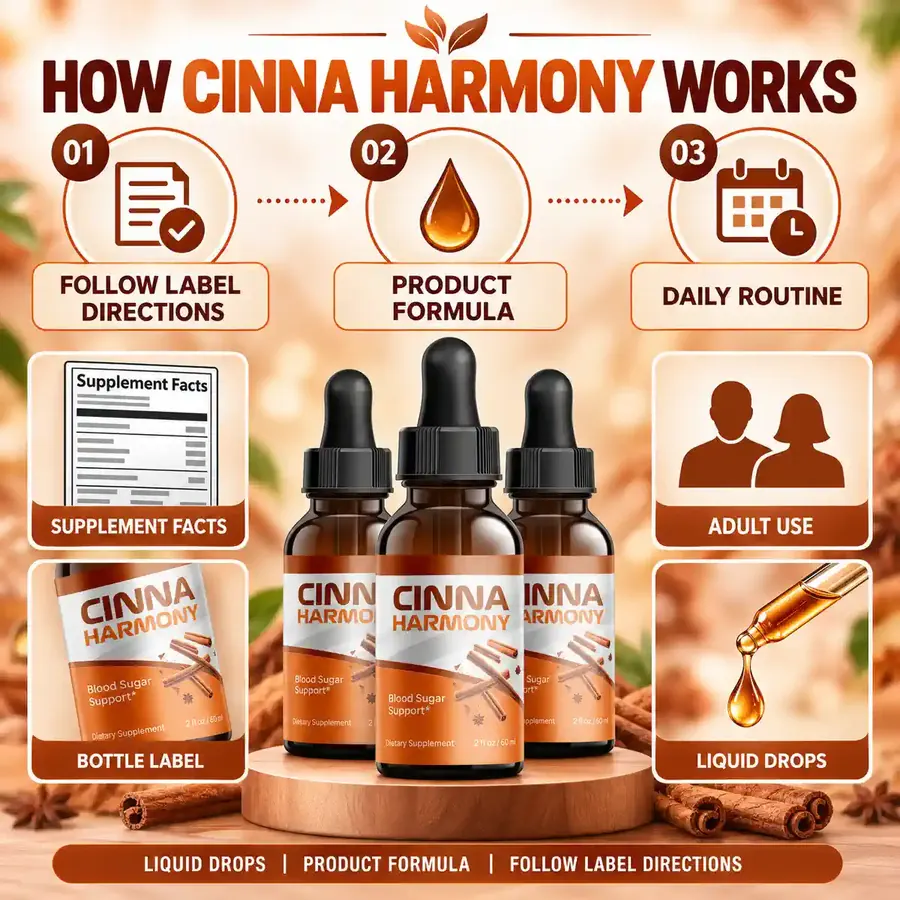
Compare options
Drops, lifestyle change, metformin, cinnamon and chromium, side by side, with the evidence behind each one.
Read moreUSA Authorized Cinna Harmony Retailer
Ready to try Cinna Harmony?
Pick a pack on the sales page. 1 or 2 droppers a day, 30 to 60 days per bottle. Guarantee: 60 days from purchase.
- Order on the sales page
- 60 days from purchase
- Label email: [email protected]