Comparison guide
Best Blood Sugar Supplement: 7 Steps to Compare Cinna Harmony and Others
The best blood sugar supplement for you is the one whose label, doses, seller and cost match your goal, and seven steps make that easy to check. The steps are goal, label, proof, doses, safety, seller and cost. Cinna Harmony is the worked example here, and your clinician should guide any choice about blood sugar.
Written by The Cinna Harmony editorial teamMedically reviewed by Dr. Andres Palacio, MD, PhysicianReviewed Updated 9 min read
At a glance
Key facts
- The ADA's 2026 Standards do not recommend herb, spice or micronutrient supplements such as chromium for blood sugar benefit.
- No supplement is approved by FDA before sale, and none replaces prescribed diabetes treatment.
- Cinna Harmony has no published trial, lists no cinnamon, and hides the amounts of its 22 blend ingredients.
- The best-tested step for prediabetes is a lifestyle program: 58% lower chance of type 2 diabetes over about 3 years in a large trial.
- Some supplement ingredients can intensify diabetes medicines and cause low blood sugar. Ask your doctor first.
- Compare cost per day and the refund terms, not the biggest claim.
Step 1
Step 1: What are you trying to do, and what do your numbers say?
Start with the goal, because "the best blood sugar supplement" depends on it. Are you curious about a routine? Do you have prediabetes? Do you have diabetes and take medicine? Your answer changes who should be in the conversation.
A supplement is not a treatment. The searches "supplement to lower blood sugar" and "blood sugar supplements that work" both assume a promise that the sources do not support. The ADA says supplements are not proven to lower blood glucose (ADA, Vitamins and supplements), and FDA warns that products claiming to treat diabetes can delay proper care (FDA, Illegal diabetes products).
Know your range before you shop. For adults who are not pregnant, a normal A1C is under 5.7%, prediabetes runs from 5.7% to 6.4%, and 6.5% or higher is the diabetes range (NIDDK, Diabetes tests). If your numbers are raised, your doctor comes first.
Step 2
Step 2: What does the label really say?
Ignore the front. Read the back. A good label names each ingredient and gives an amount for each one. A weaker label hides them in a "proprietary blend" that shows only a total. Both are legal. Only one lets you judge the dose.
Match the name to the list, too. Cinna Harmony is the example we know best. The name starts with "Cinna" and the art shows cinnamon, yet no cinnamon appears on the label. A mismatch between a name and a list does not prove a bad product, but it tells you where to read slowly (21 CFR 101.18(b)).
Step 3
Step 3: Is there proof for this exact product?
Look for a published human trial of the same product at the same dose. The FTC expects health claims to rest on that kind of evidence (FTC, Health Products Compliance Guidance). Research on one herb, or on one study with a high dose, does not carry over to a blend of many ingredients in small amounts.
Most blood sugar supplements, including Cinna Harmony, fail this step. That does not make them dangerous. It means the claim is untested, and you should buy with that in mind.
Step 4
Step 4: Do the doses match the research?
Line up what is printed with what was studied. In Cinna Harmony, chromium is 0.7 to 1.4 mcg a day against a 35 mcg Daily Value. The whole blend is 200 to 400 mg for 22 ingredients, while a typical gymnema dose alone is 1,200 mg a day (LiverTox, Gymnema). Most cinnamon trials used about 2 g of cinnamon a day, and this bottle lists none (Cochrane, Leach and Kumar 2012).
Do the same sums for any product. If a label shows a famous herb but no amount, ask how much it could possibly weigh. In a blend listed heaviest first, the ingredient in place k can weigh at most the blend total divided by k.
Step 5
Step 5: What are the safety flags and medicine clashes?
Check every named ingredient against what you take. The ADA warns that some supplement ingredients can intensify diabetes medicines and cause lows, while others may raise glucose (ADA, Vitamins and supplements). For many people with diabetes, a reading below 70 mg/dL is low, and insulin, sulfonylureas and meglitinides carry the most risk (NIDDK, Hypoglycemia).
FDA has also found products sold for diabetes that hid prescription drugs (FDA, Illegal diabetes products). That is another reason to buy only a product with a full label. Take the bottle to your doctor or pharmacist, and name every supplement you use.
Step 6
Step 6: Who is the seller, and what do reviews and stores prove?
A big store name is not a test result. A product on a marketplace shelf can still be a copy, an old lot or a different formula. Check the seller, the label and the return terms. Cinna Harmony is a good case: we could only confirm the brand's sales page as a place to buy.
On reviews, use the seven checks in our reviews guide. Look for reviews tied to orders, spread across independent sites, and light on miracle claims.
Step 7
Step 7: What does it cost per day, and what is the exit?
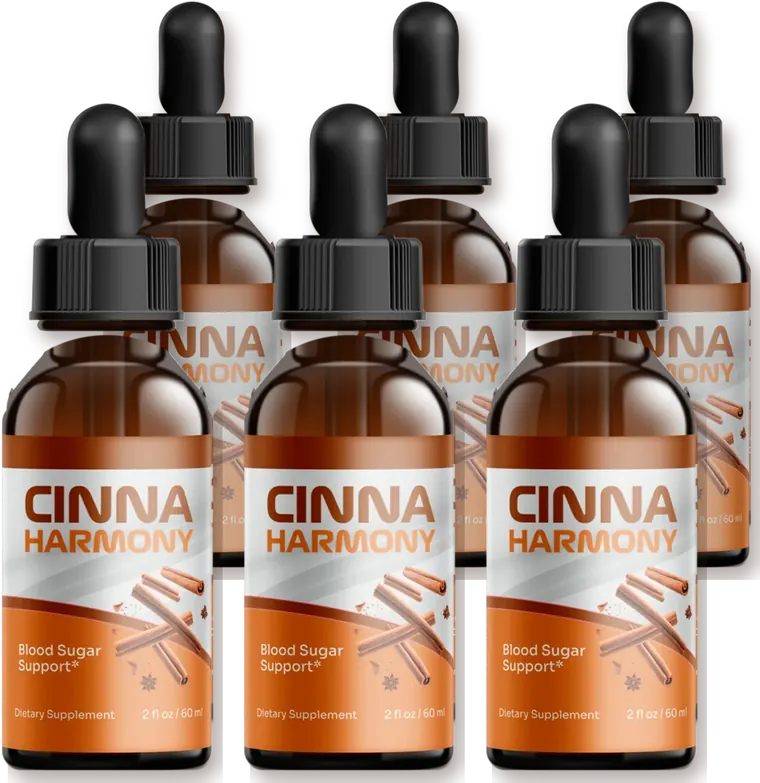
Divide the pack price by the days it lasts. For Cinna Harmony at 2 droppers a day, that is about $2.63, $2.30 or $1.63 a day for the 2, 3 and 6-bottle packs (Cinna Harmony sales page, October 2026). Then read the refund terms. Its guarantee runs 60 days, with a 30-day-use note and conflicting wording, so we advise a written reply before any return.
A smaller first order is the easier exit. Save the order email and screenshot the terms, whatever you buy.
Scorecard
How does Cinna Harmony score against the seven steps?
| Step | What we found for Cinna Harmony | Result |
|---|---|---|
| 1. Goal | Labeled Blood Sugar Support. Not a diabetes treatment. | Know your numbers first |
| 2. Label | Full list, one printed amount (chromium 0.7 mcg), 22 hidden amounts | Partly clear |
| 3. Proof | No published trial | Not published |
| 4. Doses | Chromium 2% to 4% of the Daily Value a day | Small |
| 5. Safety | Flags for diabetes medicines, caffeine, licorice, green tea and xylitol | Ask your doctor |
| 6. Seller | Distributor named; maker not named; one confirmed place to buy | Partly clear |
| 7. Cost and exit | $158, $207 or $294; 60-day guarantee with conflicting words | Get terms in writing |
Options
How does Cinna Harmony stack up against other kinds of blood sugar options?
Not against named rivals. We compare it with kinds of options, using the evidence that exists for each one.
| Option | Tested for blood sugar? | What the evidence shows |
|---|---|---|
| Cinna Harmony drops | No published trial | Chromium 0.7 to 1.4 mcg a day plus a 200 mg blend with hidden amounts; no cinnamon |
| Lifestyle program with modest weight loss and activity | Yes, large trial | 58% lower chance of type 2 diabetes over about 3 years (NIDDK, DPP) |
| Metformin (prescription) | Yes, large trial | 31% lower chance in the same trial |
| Cinnamon supplements | Yes, small trials | Mixed fasting glucose results; no clear A1C change in a Cochrane review (Cochrane, Leach and Kumar 2012) |
| Chromium supplements | Many small trials | Slight changes of unclear meaning; ADA does not recommend (NIH ODS, Chromium) |
The lesson is simple. The options with the strongest evidence are habits and prescribed care. Supplements sit at the bottom of the evidence ladder, and Cinna Harmony sits at the bottom of that.
Healthy support
What counts as healthy blood sugar support?
In the Diabetes Prevention Program, adults worked toward 7% weight loss and 150 minutes of activity a week. Their chance of type 2 diabetes dropped by 58% over about 3 years, and by 71% in people 60 and older (NIDDK, DPP). CDC runs a yearlong version it calls proven to cut type 2 diabetes risk in half (CDC, National DPP).
That is the real "support": food you can live with, more walking, steady sleep and your doctor's plan. A supplement, if you add one, sits beside those habits and never in place of them.
FAQ
Frequently asked questions
Which blood sugar supplement is the best one?
No supplement has been shown to be best. The ADA's 2026 Standards list herb, spice and chromium supplements as not recommended for blood sugar benefit. If you shop, compare label, proof, doses, safety, seller and cost, and ask your doctor.
Do blood sugar supplements really work?
The ADA says supplements are not proven to lower blood glucose, and some can intensify diabetes medicines. Most products, Cinna Harmony included, have no published trial of the finished product.
Is there a supplement to lower blood sugar?
No supplement is approved to lower blood sugar. FDA says products that claim to treat a disease are regulated as drugs. Proven steps are a lifestyle program and care prescribed by your doctor.
Where does Cinna Harmony stand next to other blood sugar products?
Like many, it has a labeled formula and no published trial. Its chromium is small, its blend amounts are hidden and it lists no cinnamon. Read each product's label and proof the same way.
Who needs blood sugar support?
Anyone with a raised A1C or fasting glucose should talk to a doctor, not start with a supplement. An A1C of 5.7% to 6.4% is prediabetes and 6.5% or higher is the diabetes range.
What is healthy blood sugar support?
Habits with the strongest evidence: about 7% weight loss if advised, 150 minutes of activity a week, and a structured program. In a large trial that cut the chance of type 2 diabetes by 58%.
Is Cinna Harmony one of the best blood sugar supplements?
No product is proven to be the best. Cinna Harmony lists chromium at 0.7 mcg and a 200 mg blend of 22 ingredients with no single amounts. Compare it with other products using the same seven steps.
What should I look for on a Cinna Harmony blood sugar supplement label?
Check the serving size, each amount, whether a blend hides single doses and the warnings. For Cinna Harmony, the label shows a 1 mL serving, chromium at 0.7 mcg and a 200 mg blend of 22 ingredients.
How do I read a blood sugar supplement label?
Start with the Supplement Facts panel: serving size, each ingredient and its amount, and the blend total. Then compare those lines across products.
Bottom line
Our view
The best blood sugar supplement is not one we can name, and we would be wary of any page that names one with confidence. What we can offer is a method. Know your numbers, read the label, ask for proof, check the doses, mind the safety flags, vet the seller and do the cost math.
Run Cinna Harmony through it and you get a fair picture: a real, labeled liquid with weak proof and open questions. Run anything else through it and you will learn just as much. Keep your care plan, keep your doctor in the loop and keep your expectations modest.
Cinna Harmony is a dietary supplement. It is not FDA approved, and no dietary supplement is approved by the FDA before it is sold. It is not intended to diagnose, treat, cure, or prevent any disease. Take any medical question to your doctor or pharmacist.
Last updated