Evidence check
Does Cinna Harmony Really Work? Five Label Checks Before You Buy
Does Cinna Harmony really work? Five label checks help you decide for yourself, since no trial of the product has been published. The label lists 0.7 mcg of chromium and a 200 mg blend of 22 ingredients with amounts shown as one total. The ADA does not recommend herb, spice or chromium supplements for blood sugar.
Written by The Cinna Harmony editorial teamMedically reviewed by Dr. Andres Palacio, MD, PhysicianReviewed Updated 8 min read
At a glance
Key facts
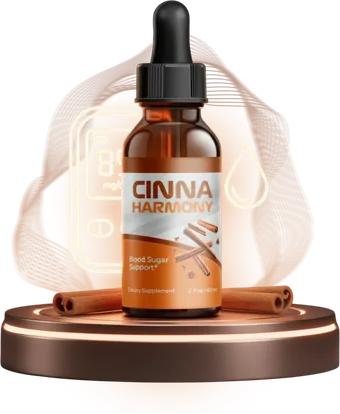
- What it is: a liquid dietary supplement labeled Blood Sugar Support, 2 fl oz (60 mL), 60 servings of 1 mL.
- We found no published trial of Cinna Harmony, so no one can say it works or how long it would take.
- Label amounts: chromium 0.7 mcg (2% of the Daily Value) and a 200 mg blend of 22 ingredients, no single amounts.
- The ADA's 2026 Standards do not recommend herb, spice or chromium supplements for blood sugar benefit.
- No cinnamon is listed, so cinnamon research does not apply.
- A structured lifestyle program cut the chance of type 2 diabetes by 58% in a large trial. No supplement was part of it.
Check 1
Check 1: What is Cinna Harmony, and what does "Blood Sugar Support" mean?
Cinna Harmony is a dietary supplement sold as a liquid with a dropper. You take one or two droppers a day. The front of the label says "Blood Sugar Support," followed by an asterisk that points to the FDA statement on the back.
"Support" is a soft word. It is a brand phrase, not a test result and not a medical claim the FDA has checked. It is not insulin, not a diabetes drug and not a treatment for prediabetes. If you search for "what does blood sugar support do," the honest answer for any supplement is: only what a study shows, and for this bottle there is no study.
The sales page goes further. It speaks of insulin sensitivity and carbohydrate metabolism (Cinna Harmony sales page, October 2026). No trial of this product measured either. Parts of that page go into disease claims that only a drug may make, and we do not repeat them.
Check 2
Check 2: Has anyone tested Cinna Harmony in people?
We found no published trial. That is the single most important fact on this page. When people ask "does Cinna Harmony really work," the fair reply is that the question has not been asked in a study.
The FTC expects health claims to rest on competent and reliable scientific evidence, generally human trials of the same product at the same dose (FTC, Health Products Compliance Guidance). Research on single ingredients does not stand in for that, because a blend of 22 ingredients in 200 mg is a different thing from a high dose of one herb.
In its 2026 Standards, the ADA says herb, spice and chromium supplements are not recommended for blood sugar benefit (ADA, Standards of Care 2026). The ADA also says supplements are not proven to lower blood glucose (ADA, Vitamins and supplements).
Check 3
Check 3: Are the doses on the label big enough to matter?
Compare the label with the research doses. The label amounts below assume 2 droppers a day and that a dropper holds about 1 mL, which the label does not say.
| Item | On the label per day | Research reference |
|---|---|---|
| Chromium | 1.4 mcg, about 4% of the Daily Value | Daily Value is 35 mcg; adults need about 25 to 35 mcg a day (NIH ODS, Chromium) |
| Gymnema | At most 50 mg, amount not printed | A typical dose listed by LiverTox is 400 mg three times a day, 1,200 mg in all (LiverTox, Gymnema) |
| Whole blend | About 400 mg for all 22 ingredients | A third of the daily gymnema dose, and it includes 21 other ingredients |
| Cinnamon | None listed | Most cinnamon trials used about 2 g a day (Cochrane, Leach and Kumar 2012) |
A long list is not a strong dose. The label is honest about that, if you read it closely.
Check 4
Check 4: What is behind the ingredients the sales page names?
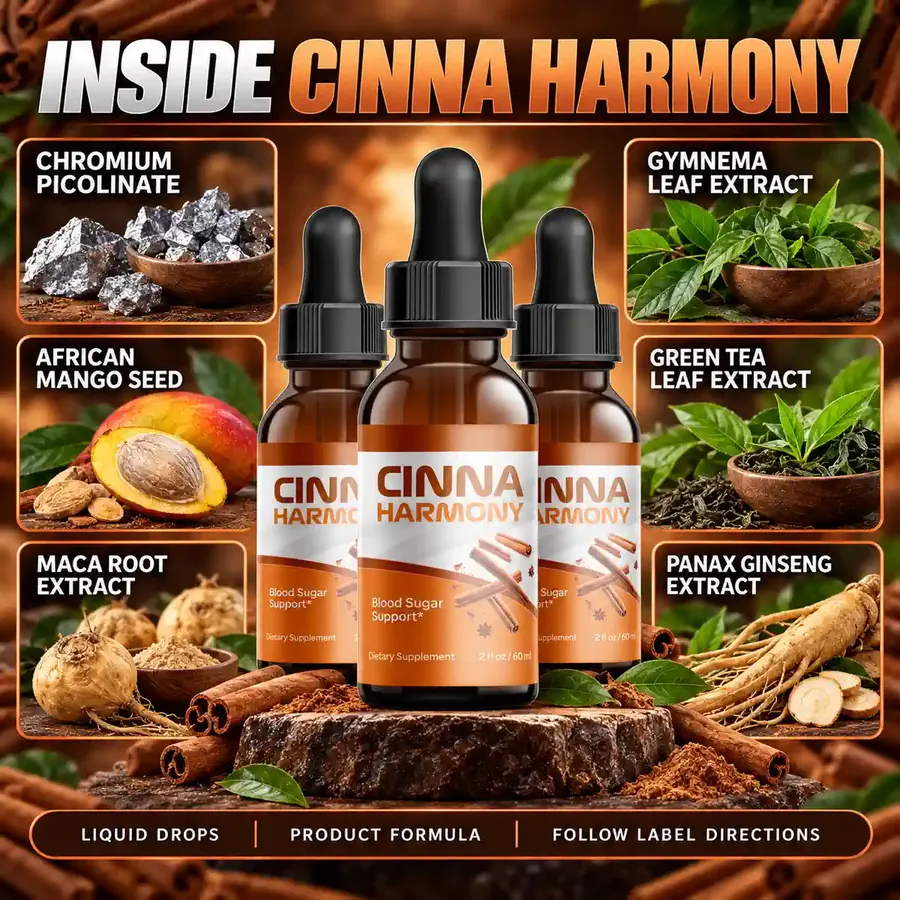
The sales page names six: chromium picolinate, gymnema leaf extract, African mango seed extract, green tea leaf extract, maca root extract and Panax ginseng aerial extract. Here is what the public sources say about each.
| Ingredient | What research shows |
|---|---|
| Chromium | Glucose trials are inconsistent and any changes were slight (NIH ODS, Chromium) |
| Gymnema | Small trials showed mild drops in fasting glucose; not shown to treat diabetes (LiverTox, Gymnema) |
| African mango | Three small, poor-quality weight trials (NIH ODS, Weight loss supplements) |
| Green tea extract | A caffeine source; a well-established rare cause of liver injury (LiverTox, Green tea) |
| Maca root | Dose and effects are not established (MSKCC, Maca) |
| Panax ginseng, aerial | Root research is mixed; leaf and stem blood sugar data come from animals and test tubes (Wang et al., Chin Med 2009) |
None of these rows proves that the finished liquid works. Some show reasons for care. For the full flag list, see our side effects checklist.
Check 5
Check 5: What does have strong evidence for blood sugar?
In the Diabetes Prevention Program, a structured lifestyle program lowered the chance of type 2 diabetes by 58% across about 3 years (NIDDK, DPP). Its goals were 7% weight loss and 150 minutes of activity a week. In people 60 and older the drop was 71%. Metformin, a prescription drug, cut the chance by 31% in the same study.
CDC runs a yearlong National Diabetes Prevention Program that it calls proven to cut type 2 diabetes risk in half (CDC, National DPP). No supplement was tested in that trial. So if you want results you can count on, those habits and your doctor's plan come first, and a supplement, if you add one, comes after.
Mechanism
How is the Cinna Harmony formula meant to do its job?
The brand's idea is a daily routine: follow the label, take the formula, repeat each day. The formula is many small ingredients in one liquid. How any of them would act in the body at these amounts has not been studied for this product.
That is why we avoid mechanism talk. A claim like "it speeds up metabolism" needs a study, and none exists. A fair summary is this. The label shows what is in the bottle. It does not show what the bottle does.
Your numbers
Who needs blood sugar support, and where do your numbers fit?
Where your labs fall matters more than which supplement you pick. For adults who are not pregnant, an A1C under 5.7% is normal, 5.7% to 6.4% is prediabetes and 6.5% or higher is in the diabetes range. For fasting glucose the ranges are 99 mg/dL or lower, 100 to 125 and 126 or higher (NIDDK, Diabetes tests).
One reading is not a diagnosis. Your doctor confirms with repeat tests. If your numbers sit in a raised range, ask about proven steps and about any supplement you plan to add, especially if you take insulin or diabetes pills. The label asks anyone with a known medical condition to see a physician before use.
FAQ
Frequently asked questions
Does Cinna Harmony really work?
No published study has examined Cinna Harmony, so nothing shows that it works for blood sugar. Its chromium is 2% to 4% of the Daily Value a day, the herbs come in small hidden amounts, and the ADA does not recommend such supplements for glucose.
How does Cinna Harmony work?
No one has studied that. The label lists 0.7 mcg of chromium and a 200 mg blend of 22 ingredients per 1 mL serving, each in a hidden amount. The brand describes support, but no trial has measured an effect in the body.
What is Cinna Harmony?
It is a liquid dietary supplement labeled Blood Sugar Support, in a 2 fl oz amber bottle with a dropper and 60 servings of 1 mL. The directions say to take 1 or 2 droppers full daily.
Has Cinna Harmony been studied in a clinical trial?
We found no published trial of Cinna Harmony. Research exists on single ingredients, usually at higher doses than a 22-ingredient blend in 200 mg can hold, and it does not prove the finished product works.
What does blood sugar support mean?
On a supplement label it is a broad phrase and not a proven effect. It does not mean the product treats diabetes. For anything medical, talk to your doctor.
What has proven results for blood sugar?
A lifestyle program with about 7% weight loss and 150 minutes of activity a week cut the chance of type 2 diabetes by 58% in a large trial. Metformin cut it by 31%. Supplements were not part of that trial.
Are there trials that show Cinna Harmony works?
No trial of Cinna Harmony has been published. This post runs five checks on the label doses, the formula and the sales claims so you can judge the evidence yourself.
What does the Cinna Harmony label say about the amounts?
The label lists chromium at 0.7 mcg and a 200 mg proprietary blend of 22 ingredients. The blend does not show the amount of each ingredient, which is why the doses are hard to judge.
What ingredients are listed on the Cinna Harmony label?
The label lists chromium at 0.7 mcg and a 200 mg proprietary blend of 22 ingredients, including guarana seed extract and green tea leaf extract.
Bottom line
Our view
Does it work? The honest answer is "unknown." The product has a clear label and no study. Its doses are small, its herb amounts are hidden and the one named benefit, blood sugar support, has never been measured for this bottle.
If you still choose to try it, keep your proven habits and your prescribed care exactly as they are, track your lab numbers with your doctor and judge by those numbers, not by the name on the front.
Cinna Harmony is a dietary supplement. It is not FDA approved, and no dietary supplement is approved by the FDA before it is sold. It is not intended to diagnose, treat, cure, or prevent any disease. Take any medical question to your doctor or pharmacist.
Last updated